Season 2, episode 1. September 14, 2025
Originally recorded on March 19, 2025
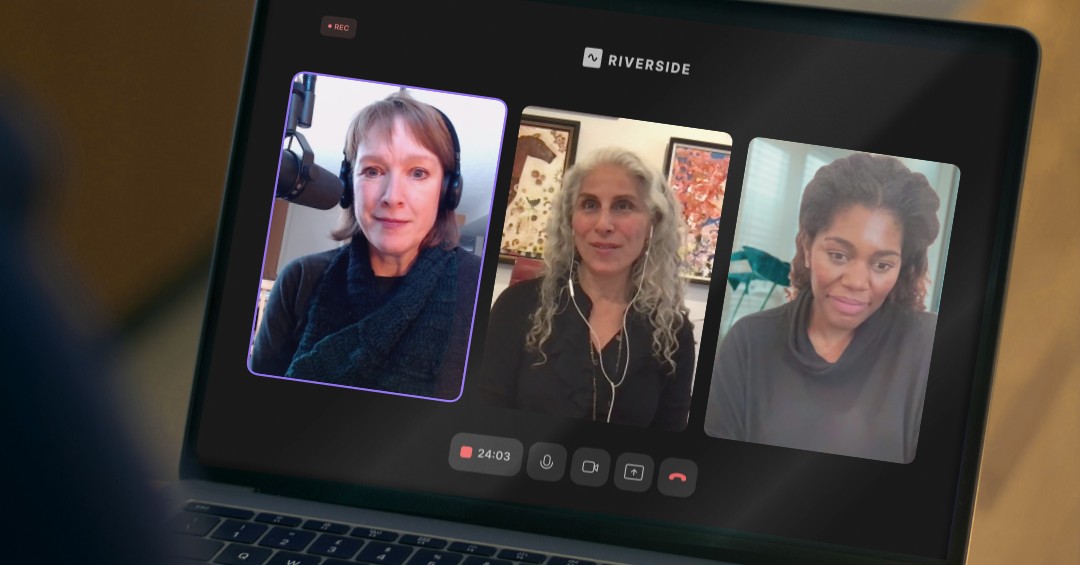
SPEAKERS Dayna Del Val, Azin Radsan van Alebeek, La Keisha Landrum Pierre
SUMMARY
In this conversation, Dayna Del Val speaks with Azin Radsan van Alebeek and La Keisha Landrum Pierre about their experiences in venture capital, the importance of defining middle ground and the empowerment of women in business. They discuss the challenges and opportunities within the venture capital space, emphasizing the need for community, collaboration and the breaking of stereotypes. The conversation highlights the evolving landscape of venture capital, particularly regarding women-led funds and the impact of investing in diverse businesses.
KEYWORDS
venture capital, women in business, Emmaline Ventures, impact investing, entrepreneurship, middle ground, empowerment, community, diversity, innovation
TAKEAWAYS
- Venture capitalists are often misrepresented in media.
- Middle ground can mean operating outside traditional norms.
- Empowered women can create a ripple effect in business.
- Impact investing can yield significant financial returns.
- Community and collaboration are vital in venture capital.
- Women-led funds are gaining traction and size.
- The venture capital space is evolving with more inclusivity.
- Understanding the private markets is crucial for investors.
- Cultural narratives shape perceptions of gender roles.
- Exploration in venture capital is akin to navigating uncharted waters.
Dayna Del Val 00:01
Azin and La Keisha, thank you for joining me on Brave Middle Ground as my first pair in this conversation.
Azin Radsan van Alebeek 00:09
Thank you, Dayna, it’s a pleasure to be here.
La Keisha Landrum Pierre 00:12
We are thrilled to be here. Dayna, thank you for having us.
Dayna Del Val 00:15
Well, I’m thrilled that you said yes, because you live in a world that is extremely foreign to me. I had all kinds of, I think, stereotypes of what venture capitalism was, who venture capitalists were, and when I met you almost exactly a year ago, Azin, you, in about one and a half sentences, dispelled all of the things that Hollywood told me venture capitalists are, and you made it abundantly clear that actually venture capitalists are just people, which was so shocking to me.
Azin Radsan van Alebeek 00:54
I’m like, now we want to know, what did I say?
Dayna Del Val 00:57
Well, we can talk about it. I do remember, but we’re going to start and then we’ll go into that.
Azin Radsan van Alebeek
Sounds great.
Dayna Del Val
I want to know from the two of you and from your joint venture of Emmeline Ventures, which we will talk about more, so people get a great sense of what this beautiful business is, I want to know how the two of you define middle ground from your perspectives,
Azin Radsan van Alebeek 01:23
That’s such a great question, Dayna, and it obviously is very topical to the podcast for middle ground. With respect to Emmeline Ventures, I want to say there’s a part of me that wants to answer and to say there is no middle ground.
Dayna Del Val 01:43
Okay. Why?
Azin Radsan van Alebeek 01:45
Because everything we’re doing at Emmeline Ventures is in the space that has been depending on, what analogy I’m trying to make sure that I’m keeping the correct analogies. But we are outside the normal. We are outside the center. We are in the blue ocean. We are away. We are not in the middle. And it’s not to say, I was careful not to say we’re in the fringes, because that connotes something, but we are in a whole other space. That is where our focus is. That is not where traditional, typical venture capital has played, and so I’m sure that’s part of the dispelling of the myth is because we are not part of the myth.
Dayna Del Val 02:30
I love that.
Azin Radsan van Alebeek 02:32
Thank you. Yeah, I love that. Maybe I should just stop there.
Dayna Del Val 02:38
No, keep going. It’s all gonna be good.
Azin Radsan van Alebeek 02:40
What I want to also say is in the middle ground for me, and it’s something based on background, experiences, philosophy, values, everything all packaged together. For me, I often present myself as—I’m known for being a bridge, right? And a bridge is the middle ground, as I have operated across cultures, languages, geographies, political beliefs, genders, sport, between the athletes and the nerds, right? Like I am middle ground, because I can operate on the continuum in almost any edge. And for me, that is a rare, rare place to be able to stand. And I wish more of us were in there to understand that we’re so intricately linked in the middle.
Dayna Del Val 03:44
Wow. Okay, La Keisha, I want to hear your answer in one second, but I want to just ask a follow up question Azin, because I’m really fascinated. Are you personally the middle ground by choice, by necessity, by virtue of your temperament, strengths and experiences? How do you find yourself there?
Azin Radsan van Alebeek 04:07
Ooh, I haven’t had someone ask me that. And as you were asking, I thought I knew the answer, and then I think so I would say it is a combination. I mean, I’m gonna go back to the middle ground, right? It is temperament. I’m an earth sign. I’m centered. I’m balanced, right? It is by experience. For the fact that I was born in the US to Iranian immigrants from Iran, I held two cultures all the time, and then I was married to a Dutchman and lived in the Netherlands. So experiences have exposed me to that, to becoming, to leaning into that temperament that was there.
Dayna Del Val 04:54
I gotta say, anytime you give me a tiny little insight into your life, because I know you, but I don’t know you that well, I feel like A) you are…you’re like a romance novel character in the best sense of the word. And I’m so drawn to your lived experience, which, I will say, I’m sure has not always been easy.
But the way you present it has such an epic arc to it and such a romance to it. If you just said to me those sentences, called me up every day and said, “Oh, my parents are Iranian immigrants, and then I married a Dutchman, and then I lived in the Netherlands.” I would be happy to hear those sentences every day, Azin, because they kind of take me on a on an exotic journey.
Azin Radsanvan Alebeek 05:48
I appreciate that, and it’s in storytelling and narratives are so important as our mindset, right? Because I could shape and tell you the same facts in a very different way.
Dayna Del Val 06:04
I’m sure that’s true.
Azin Radsan van Alebeek 06:06
And so that gets back to middle ground, and I have to throw one more thing in La Keisha, and I apologize but…and I forget, there’s Socrates, there’s Plato, there’s Aristotle, and I know that they go in that order. Is it Aristotle who espoused the mean? I want to Google search this so maybe one of your podcast listers will share with us their knowledge, and that will be great. And in the interim, we will also look it up.
I want to bring back because we often think in venture about the future, but we have to recognize the past and whose shoulders we stand on, and our ancestors And our parents obviously right, and my mother, I remember, ever since a child right, talking about finding that middle ground, finding that right balance, not being too far one way or the other, like the importance of moderation.
Dayna Del Val 07:12
That’s powerful, and something we all could stand to use a little more of, I say, holding a mirror right up to my face, very, very close. Not my favorite place to be, but, yeah, it’s, it’s so vital.
Azin Radsan van Alebeek 07:24
So vital. Well,
Dayna Del Val 07:26
Thank you for that. Okay, La Keisha, I’m really curious to hear how you think about middle ground from Emmeline and from your personal perspective.
La Keisha Landrum Pierre 07:38
Well, okay, I know we said that Azin might, like, take the question first, but I should probably take it first if it’s going to be, if your answer is
Dayna Del Val 07:46
Going to be that phenomenal? You did raise the bar, Azin.
La Keisha Landrum Pierre 07:52
Absolutely raised the bar. And that’s why I’m so thrilled that she’s my partner. She’s truly, truly brilliant, and that came across in like, two seconds. My goodness.
So what would I add to that? Because, quite frankly, I think it was a mic drop, and I could very happily go on to the next question. But where I would say, we’re, you know, Azin. Obviously, she and I know each other very well. We’ve been working together for nearly half a decade, which is wild. But where she and I are actually quite similar is that we’re both bridges. I, middle ground really, to me, means being a connector between worlds, between ideologies, between perspectives. But not just being a connector, but being, like, a person who can really draw, create harmony and we really do a lot of that at Emmeline. Because people often say, “Well, oh, you’re an impact investing firm.”
We’re like, “No, we’re we are not an impact investing firm.”
But so much of what we’re really trying to show is that this world of having impact and having outsized returns can come together and don’t have to be two worlds and like, “Oh, you’re over here doing impact investing, and you’re over here making a lot of money investing.”
You know, we’re, our entire ethos is that actually you can make a lot of money investing, and you can invest in health care, which are we, where we play, right?
So health, wealth and sustainability, like, you can actually invest in spaces that have a lot of impact. Like when we’re investing in tech and in the transportation business, and when Uber and Lyft and other sort of disruptors in that space came in, they weren’t impact investors. But my goodness, how much did it impact the industry? Right? How much did it impact the world, and how we even experience it?
Like, when I go to South Africa, I’m using Uber, and then when I go to Prague, I’m using Uber, and then when I’m here in LA, I’m using Uber, right?
And so I think the this notion of being like a bridge between worlds and ideologies, to create a harmonious interaction between the two of them. And it does, just as Azin said, like for me, it very much, it shows up in all the ways in which one could imagine it showing up, right? It shows up whether it’s from, like, spiritual beliefs and religious beliefs or it could be political perspectives, or it can be, you know, in this case, investment theses and approaches. So I would say that’s kind of what middle ground means to me. I’m going to pause because I know you have other questions for us.
Dayna Del Val 10:29
Well, and I’m going to say you met the bar. So congratulations operating very high level.
La Keisha Landrum Pierre 10:38
What a bar. I said, Okay, breathe and come up with something interesting.
Dayna Del Val 10:42
Well, challenge met and well exceeded.
So I was on your website today just to look a little bit at how you’re talking about what you do, and your opening salvo is “Empowered women empower women.”
So before we go down sort of your philosophical approach, let’s just talk about venture capitalism, and Azin, I’ll go back to how I started this, and I’ll tell you how you and I connected, because you had many, many events last year around this experience; I had one, so it’s very present in my mind.
The Fargo Film Festival was showing a film called Show Her the Money. And a friend of mine who’s very involved in the film festival, Kendra, wrote to me and said, “I think you’re going to want to see this film.”
So I went that evening having no real idea what I was going to see, and the film started, and it’s very quickly revealed that this is a film about women venture capitalists investing in women. Women-founded businesses, none of which I have any real sense of on either side. But the film is so compelling; it’s so well done. The storytelling is so clear, and both the journey of the venture capitalists and the women attempting to get capital funding is just, I was drawn in from start to finish.
I have thought many times over this last year about the various people who were looking to receive funding, and the journey that they take throughout the film. And, you know, the rise and the fall and the ebb and the flow.
And what struck me about it in the overall was how normal everybody was. That it was just people who had good ideas, sitting down in front of people who had capital, asking the people with capital to invest in the good ideas, which is exactly what I did when I ran a nonprofit. And so, it very quickly became a thing that suddenly wasn’t something that only multi-millionaire men got to do, or, you know, 27-twerpy year olds in their Zippy hoodies walking around San Francisco, but it was a thing that women of all shapes and sizes and colors and ages could participate in.
So okay, I watched the film. I’m really moved by the film, and then there’s a panel, and I’ve just seen you in the film, both of you, right? La Kesha, you’re in it as well.
La Keisha Landrum Pierre 13:39
I’m in it.
Dayna Del Val 13:39
Yes, okay, yeah.
La Keisha Landrum Pierre 13:41
I’m in it, Dayna, but Azin steals the show.
Azin Radsan van Alebeek 13:44
Oh my gosh, I was gonna say the exact opposite.
Dayna Del Val 13:53
You’re both fantastic. Azin shows up on stage for this panel.
Okay, so they ask if anyone has any questions, and I think we were all sort of stunned by the film, and so there really weren’t a lot of questions, which empowered me to A) want to fill the space, because silence sometimes makes me feel awkward. And B) I was fascinated, so I raised my hand and I just said I felt like the film…exactly what I just said to you…humanized this world and made it so accessible. Made it seem like anybody could be an investor. I thought you had to have millions and millions of dollars, already be wealthy before you could exponentially grow your wealth.
And you lit up. Lazin, I mean, you were already, did I just call you Lazin? That’s a combination of the two. Like, if you’re a famous Hollywood couple,
La Keisha Landrum Pierre 14:46
That’s fun.
Dayna Del Val 14:47
Azin, you lit up underneath this spotlight, and you turned and you said, “That’s such a great comment. Thank you for noticing that.”
And you made me feel so seen; you made me feel so valued as somebody who 45-50 minutes earlier, if someone had said, “Dayna, do you think you could ever be a venture capital investor?” would have said, “Oh, please, I work for a nonprofit. Give me a break. Move along.”
And you just changed everything. And then afterwards, you sort of came tearing down off the stage, and someone came up to talk to you, and you found me in the audience, and you sort of loudly said, “Stay right there. I want to talk to you.”
And I thought, “Oh my gosh.” I mean, I felt like I was in the presence of like a rock star. So of course, I stayed, and the rest is a little bit, we’ve become friends. Well, the point is just, I think what the film does, I think what you do, I think the work that Emmeline is doing has many, many important elements, which we you will touch on in our conversation. But
Azin Radsan van Alebeek 16:07
Yeah.
Dayna Del Val 16:07
From an outside perspective, what I think is so important is that you are normalizing this idea that venture capitalism is accessible for way more people, both probably on the investor and on the receiving end, than most of us who are not, who don’t operate in that world have ever imagined was possible.
And so I’m curious, 45 minutes into this very long question, I’m curious what your intentionality around that was, because I could tell from you that this was not an off the cuff thing. This was a very intentional piece of the modeling you did to build Emmeline Ventures.
Azin Radsan van Alebeek 17:01
A hundred percent. Thank you, Dayna, for like, for the buildup, the lead, the framing of all of this. And there’s actually, I’m like my brain. I’m trying to bring it all together. I want to come back to the Empowered women empower women, right? Everything you talked about, for me, is an illustration of that concept, of that ethos of really in all our actions, all our interactions with others, is how do we unlock opportunities for people?
And it’s very broad, and Show Her the Money, and which I always give credit to La Keisha for ensuring that we got involved with that. Like, she had to really knock me on the head and remind me how powerful it will be and could be. And it has been right, and it has been one of the greatest gifts personally, individually, and I think also for Emmeline, because the marriage, the intermixing of that opportunity to imbue into individuals the recognition of their power and strength and ability, it’s so easily done through this narrative. And, you know, kudos to Ky Dickens for the storytelling, and great applause to Catherine Gray for being the champion to get this film made, the executive producer.
So I’m trying to think, if there what more I need, I would like to share with you is the Empowered women empower women. And yes, very deliberate, and so I’m going to overlay in my background includes training and life coaching, and both life coaching, executive coaching and actually some athletic coaching as well. And it’s that idea of taking the human potential that sits before you. Everyone is creative, resourceful and whole. Everyone holds such great power in her, in him, and as a coach, being able to help them pull away the layers and just to remove the dirt and to let them shine, I’m like, what an amazing platform we have at Emmeline and to be able to do that at scale, both by investing in companies that are going to bring these great solutions that help us all. that That’s one direction.
On another direction that are going to employ in regions, right? And then the actual individuals who are involved in this as well, either as the founders or investors, which you’ve talked about. But frankly, there is a much larger ecosystem of people who can get involved here in this future building, and those are people in backoffice support, tech services, legal services, even just being a friend to someone. Like, every now and then, like last night, I texted someone, I’m like, “I really need to vent,” right? She’s a safe harbor for me. That’s an important person in the ecosystem who understands it. It’s an untitled role, and it’s unpaid, but all of us have an opportunity to be a part of this legacy building and future building. Does that get to the question?
Dayna Del Val
I think it does, yeah.
La Keisha Landrum Pierre 20:36
And then what I would just add is just on the point of Empowered women empower women. You know, we’ve had conversations around updates to our site, but the ethos, I think, regardless of how we talk about it, the ethos will always remain, that what we’re looking to do is, and what we believe very strongly, is that when women rise, all ships rise, right? And so that economic lift really is beneficial for everyone, and I think that ethos is really important.
Azin Radsan van Alebeek 20:36
Yeah.
Dayna Del Val
So La Keisha had to step out to a meeting, but Azin, you’re able to stay. And I’m delighted to continue to have the conversation with you. And I’m, I’m curious to know this idea of, again, intentionality and impact versus income, or, you know how these things have been seen as needing to be separate, but you at Emmeline are bridging these two things. Perhaps this is an obvious and enormous question, but why in the world, when we know through things like the micro loans that are given out in developing countries to women who get $50 and are able to turn it into things that allow their daughters to go to school, and this, this and this. And when we know what literacy does, and we have all of this actual evidence, not just in the developing world, but across all of the things. We know that when businesses have women on their boards of directors, they make smarter decisions. This is all proven. Why is the venture capital space still so largely run by white men
Azin Radsan Van Alebeek 20:36
Dayna, that is the, like, 100-million-dollar question, right? And thank you for bringing up, particularly because in the nonprofit world, I’m going to pause for a moment and just acknowledge— you’re coming from the nonprofit world, where there have been more studies, earlier done. But in the profit world, we have study after study with abundant data that show clearly, as La Keisha had mentioned, when you support her, all ships rise.
Dayna Del Val
Yes.
Azin Radsan van Alebeek
We know this is true. And yet, venture capital, 98% of venture capital funding goes to men, right? It does not make any sense. And I have many opinions on this, on why, and I will keep it to maybe two, maybe three.
So one is, I want to think about the order I give this in, but inertia is one factor. And where do you start with the inertia? Women have not entered the working force on mass, except for, I think you go back maybe 50 years, right? Like women didn’t, weren’t able to open up a checking account on their own until 1971. That’s a fact that’s shared in the movie, in the documentary. For so many reasons, women, we have not had the even playing field that men have had for lots of reasons. It’s just that is true. And so how are we going to make the inroads to change things? Is it the data that is needed to prove it? Or are there cultural shifts and changes that need to happen?
And after, even despite being a data person, someone who likes data-backed evidence and was a quantitative economics major, right? Like, give me some numbers and spreadsheets, and I’m genuinely really happy, I acknowledge this is not a data issue.
Dayna Del Val 20:36
Right. Right.
Azin Radsan van Alebeek 20:39
It starts from day zero and before. It is how do we raise our children? What narratives do we share with them, consciously and unconsciously? What cultural norms get thrown atop that we accept? What limiting beliefs do we hold ourselves? Which I know that’s like a term, and you took a sigh, right? But that’s important for us as individuals. I know that you and I work on that, right? It’s for everyone and I should really get the study, and I’d love to reference this one, because people say, “Oh, but boys this, and girls that.”
I have daughters and sons, and they’re all wonderful individuals with different personality strengths and weaknesses, right? I try hard not to be so gender-specific, and I’m sure I have been. And studies show you can take the same exact baby and you get a whole bunch of different couples. You take the same baby and you wrap it in a blue blanket, and you give it to the parents, and you can record them behaving, speaking, coddling, whatever, parenting in one way.
Same baby, wrap it in a pink blanket, same parents, totally different, right? It’s in us, and until that starts to change, I don’t know how we start changing some of the stuff. That’s one.
And two, because so much of our care, unpaid care, both the physical actual act of the care, and the mental load of planning that care, falls on, in a heterogeneous couple, on the female side. Her ability to activate, to fully optimize her abilities is hampered, and she’s in the professional realm with, like, one hand tied behind her back, if not more, because she’s taking care of all the stuff over here as well.
And so, give me different types of data to prove, like, and actually, I could say, despite these limitations, she’s still doing a kick ass job, right? Why wouldn’t we try and clear her path and make her healthier? Take her ability to be a work you know, to work to be an even larger contributor to your firm? Why wouldn’t you want to try and enhance that?
Dayna Del Val 30:17
Yeah, it feels very foolish on the part of decision makers, in the face of all the existing data, to say, “Well, there’s nothing we can do about that.”
You know? I mean, if you think about daycare as one example. The lack of access to affordable daycare, and in some cases, any daycare, just almost guarantees that in a household where there is at least a woman, she’s going to stay home. I mean, I used to say all the time, if daycare had been an issue in my life, I would have stayed home because my husband made more money, and we got our insurance through him. That would have systematically just made more sense. Why would we have given up benefits for me to go work? That just wouldn’t have made any sense,
Azin Radsan van Alebeek 31:12
Right.
Dayna Del Val 31:14
So it’s, you’re right, that it’s clearly not a data issue, because we have the data.
Azin Radsan 31:21
Right.
Dayna Del Val 31:22
And it’s so troubling. I feel like this is such a, this is one example of so many challenges, and we don’t need to go down this path, because I really do want to stay on venture capital. But this is not the only realm in which women or people of color or other minorities are soon to be shut out. And so, so it’s, I think that the conversation can be applied in many areas.
Azin Radsan van Alebeek 31:57
Yes, thank you, and I appreciate that, because I have, I’ve been on many panels where they talk about, how do we make venture capital more inclusive, bring more women in? And for me, of course, because we’re in this space, and I go to conferences that are about the space, the topic is limited to the space. But again, just to re-articulate what you just said, the issue needs to be solved in a much broader realm
Dayna Del Val 32:26
Yeah.
Azin Radsan van Alebeek 32:27
First. We can’t do it here.
Dayna Del Val 32:31
No, because this is, this is, in a lot of ways, the frosting. I mean, we sort of have to fix the cake.
Azin Radsan van Alebeek 32:37
Yes, yeah, yeah. Exactly foundational, it’s core rewriting, which is a phrase that Emmeline, we like to talk about, right? Which bringing it to venture, and so we can go down that road more, is… our investment thesis is very deliberate, thinking about the ways that we can fund business solutions to issues and problems that are limiting us, not letting us be full, fully healthy, fully contributing and fully ourselves. That’s what we can invest in, so that our future selves and our future generations, at least, we’re hoping we’ll have the benefit there. And with any kind of problem, you have to attack from all different sides, right?
So we’re using venture for that aspect of how we can influence things. And there are others working in other spaces, and collectively, we can, again bridge right? Going back and bridging, bringing knowledge of what’s going on in in universities, and thinking about women’s leadership as one working with nonprofits who are working to develop better daycare, or profit for profit, by the way, without better daycare. But it is, it is a large problem.
Dayna Del Val 34:12
Well, it’s a large ship to steer, and in some ways, it’s got maybe too many captains, and in many other ways, it has not enough captains, and so then how do you steer it?
Azin Radsan van Alebeek 34:25
Right? And that’s one analogy. And I often think about that, and I had someone give me, and it’s a common one, right? Like, if you can get the Armada all rowing in the same direction.
Dayna Del Val 34:36
Yeah, yes, yeah.
Azin Radsan van Alebeek 34:38
And so individually, we’re all doing our thing.
Dayna Del Val 34:41
But you’re right, it’s less work if everybody’s going west, as opposed to, “I’m gonna go west, and you go south, and maybe we’ll meet up someday.”
Azin Radsan van Alebeek 34:51
Yes.
Dayna Del Val 34:52
So in the four or five years that Emmeline has been a presence, what kind of movement are you seeing Azin, with the understanding that this is a long game you are playing, and it’s a long evolution to get to where we need to be?
Azin Radsan van Alebeek 35:11
Right, what I would see, and of course, progress in my brain and for my life experience, too, it’s never linear up, and I should do the right direction on screen, but it’s not just a straight line up into the right, right?
There are steps forward, back, to the side. And then there’s the typhoon whirlwind that we might feel like we’re in at the moment. What I see as positives are, I think that’s your question, right? Like, where do I see this going? Do I see hope?
I do see hope. I’m in venture capital. You have to be someone who’s future-thinking and thinking that future can be positive and being hopeful. And at the same time, you hold skepticism with almost the exact same weight. I would say the younger generations are what I’ll initially point to. They have less of a focus on gender and gender roles. There seems to be an expansion and an evolution on that that I think is helpful. More discussion about family planning and who’s involved. That I find hopeful. What I also feel hopeful on another end of things is I’m seeing women led funds that are much larger in size and able to write checks further down the track at the series A and the series B stage.
So again, of course, there’s women who are involved as GPs in all the 15 well, not a lot. GP is just a general partner. So a general partner is one of the main decision makers at a at a venture capital firm. Fifteen percent of those positions are held by women. It’s not a lot,
Dayna Del Val 37:15
Okay, I’m kind of surprised it’s that much, actually.
Azin Radsan van Alebeek 37:18
Right? Right? Okay, yeah, good.
So, 15% and, you know, there can be discussion about how much influence they really have in power and to exert their independent view. I’m just saying they’re there, right?
What’s also happening is women-led funds, not where there’s just one woman with eight guys, right, but where there’s, like, La Keisha and myself, we’re two female GPS leading Emmeline Ventures. We decide for ourselves how we want to operate. We might actually have some unconscious bias from the past experiences we’ve had, which were more male dominated roles, and so we have to, again, unlearn and reinvent.
But there are more and more of these women-lends funds. Many of us, our fund sizes dictate that we will operate in the earlier stages. And it’s wonderful that, more and more, there is the pipeline of growth, and we’re now moving into the later stages. So that’s great.
The other. And I wish I could I have the stats ready at hand, and I know that La Keisha would if she were here. We are seeing exits with female-led companies. We are seeing great valuations. There is all the metrics that you wanted to see, again the data, to prove the point that women-led ventures and women led-funds are doing the job correctly. They’re out there.
Dayna Del Val 38:54
How collaborative can you be? Do you choose to be with other firms? Is that a piece of this world?
Azin Radsan van Alebeek 39:06
For me 100%, and I would say for La Keisha as well, 100% right? We, you’ve probably heard me say more often than once, “Individually were powerful, and it’s collectively, we’re unstoppable.”
And going back to the Armada idea, we all have to be working together in the same direction. And that takes collaboration. We have regular calls with our peer GPs, who are investing in the same space. Not because we’re trying to, like, pick information from them so that we can do something without them. No, we want to share. This is, this is collaborative work. Who’re you talking to? What are you learning? What are you thinking about this, right? It is thought partnering together very much with the idea that we will elevate each other in combining forces.
Dayna Del Val 40:01
As I’m listening to you Azin, I’m so struck by the fact that really, with the exception of space and, you know, the Marianas Trench, there’s not much on planet earth that is unexplored. So, you and I were born into a world that had already sort of been fully conquered. But you are operating as explorers in this very concrete and yet abstract way. Venture capitalism feels very abstract, because you don’t go to the building of venture capitalism, and do, you know, like, here’s my briefcase of venture capitalism. It’s a whole ephemeral thing. And I understand that money is exchanged, but money also feels very ephemeral in a lot of ways, and today feels kind of like it’s all Monopoly money one way or the other.
But in this world that you and La Keisha and these other venture capital firms are in, you are really sailing into unchartered water if we’re going to keep the Armada, Amerigo Vespucci kind of idea going. You are modern day explorers, and that must feel so maddening and so thrilling.
Azin Radsan van Alebeek 41:47
Dayna, this imagery of this, I haven’t thought about it this way.
Dayna Del Val 41:52
I never have either.
Azin Radsan van Alebeek 41:53
I’m like, I’m bringing it in. I’m like, “I’m gonna own it. I’m gonna explore.”
Dayna Del Val 41:57
Yeah, can’t you kind of feel the sea air, kind of moving your hair and
Azin Radsan van Alebeek 42:01
Yes, and I’ll tell you in other than, like, immediately, right? I’m thinking of all these male explorers. I’m like, “Who are my female explorers that I need to, like, keep up there as mentors?”. And I’m thinking Sacajawea, which I,
Dayna Del Val 42:18
Yes. From my state!
Azin Radsan van Alebeek 42:21
Amazing. Who ended up in my former state.
Dayna Del Val 42:25
Yes.
Azin Radsan van Alebeek 42:25
Oregon. But thinking about her as a guide and really, truly, she should get so much more of the credit for being the lead explorer on the Lewis and Clark expedition.
Dayna Del Val 42:37
You are right, yes. In fact, I will say at our state capitol we have an absolutely exquisite public sculpture of her. So if you ever come to visit me, I will take you to see it, because it’s really, really a beautiful piece of art.
Azin Radsan van Alebeek 42:50
I’m coming, for sure. You know I’m coming. I mean, I was there, pretty much. It almost was exactly a year ago, because it was right around the Persian New Year. In fact, I think it was the day before the spring equinox occurred, which is what today is.
Dayna Del Val 43:10
Amazing.
Azin Radsan van Alebeek 43:13
But you use two adjectives to explain the Explorer feeling, and maddening was the first one. That didn’t come to mind for me.
Dayna Del Val 43:23
Good.
Azin Radsan van Alebeek 43:24
No, it’s a thrill. It’s exciting. It’s a challenge. It’s an honor, right? So that’s how I view it.
Dayna Del Val 43:36
I love that. I just I’ll give you another woman to think of, and I cannot believe I can’t get her name, but she was expelled from, I believe, Massachusetts, because she was preaching, and women were not allowed to preach in the Puritan tradition. And she was exiled to what is now Rhode Island, and essentially founded Rhode Island because she didn’t die. (Later note: her name is Anne Hutchinson).
I will find her for you and send you her name. And again, we’re putting a lot of onus on our listening audience, but if you have the name of this woman…
Azin Radsan van Alebeek 44:14
Please help us.
Dayna Del Val 44:15
I can’t believe I can’t get her name. I knew it for years and years because I was so struck by her. She was, you know, if it had been during the witch trials, I’m sure she would have been killed. But it was before that, and so she was simply banished. But she did go on to play a huge role in in some of the development of the…
Azin Radsan van Alebeek 44:34
Well done her.
Dayna Del Val 44:35
Upper East Coast. I know, good for her. Yes. What do you love about this work,
Azin Radsan van Alebeek 44:47
Oh it’s so easy. I love almost everything about it. And I was as you were asking that question, I was thinking about your comment that, you did not say this exactly, but something like venture seems very make believe.
Dayna Del Val 45:04
Ephemeral.
Azin Radsan van Alebeek 45:05
Ephemeral was the word Yeah. And I’m, if we there’s a part of me that wants to take the time and say, “Well, no, there’s the process. This is how it works. This is how it fits into the capital markets.
Dayna Del Val 45:22
I would love to hear that.
Azin Radsan van Alebeek 45:23
Yeah? and I’ll do a brief…
Dayna Del Val 45:25
Okay.
Azin Radsan van Alebeek 45:26
Just a brief idea, because venture capital is part of the private markets, and it is where, and there’s a distinction between private markets and public markets. We know about the public markets generally, because it’s the stock exchanges. And people might watch the news, and they own some equities, and everyone can play into that world if they have some, a small amount of capital to put in there, even you can get started.
That’s where the really large companies play. And by public, it means that other people can have ownership into it. There’s a market that sets evaluations on a constant basis. It’s highly liquid and highly known, the values, right? It’s not ambiguous.
Prior to that, to get to be that stage of a company who would be on a public market, you’re in the private markets. You’re owned by the founding team and other people who might put an investment in either through venture or through debt and other ways, right? They’re much smaller. They’re working towards becoming a public company. Most of the time as an objective, not always, and that’s starting to change. I’m not going to go down that road with us right now. But the public markets becomes the goal.
Where do you start? You start at the embryonic stage of an idea, one or two founders. You start building, you build your product or service, you get your fit, you get larger revenues, you start to increase and scale. That’s when you move down the road towards that public market.
In that private market, though, valuations are, and I want to, I haven’t found the right word yet. I don’t want to say arbitrary, that’s absolutely wrong. But they are a forced calculation. There is no market for the value.
Dayna Del Val 47:28
Okay.
Azin Radsan van Alebeek 47:29
Right? And that’s changing as well, because they’re secondary markets and so, but how you value things is now a function of formulas, math and calculations. And it’s also, it’s not liquid, highly liquid, because those markets don’t exist 24/7, or at least from 9:30 to. whenever the markets run—9:30 to 4:00, I think.
Dayna Del Val
Okay.
Azin Radsan van Alebeek
But there’s no real market period, so it’s illiquid, for lack of better term. And again, dear listeners, if you have a term but force, a force calculation and, and, sorry, I sort of, I’m like, giving you the primer on the private markets. And I remember now. I’m like, wait and why did, how did we get here? Dayna, please remind me,
Dayna Del Val 48:19
Because I said that I thought venture capitalism…
Azin Radsan van Alebeek 48:23
Oh, yeah.
Dayna Del Val 48:23
Sort of ephemeral.
Azin Radsan van Alebeek 48:23
Yeah, yes. And I’m saying and so, but no, there is like, there is a structure. We are risk capital. We are investing money into businesses as they are growing. And there is lots of legal documentation, lots of diligence work to understand what the business is. There is a lot of thought partnering and work and post investment support to help the businesses grow and thrive. It is, it is part of a very fluid entire capital market system. It is one piece of the cog. Is that helpful?
Dayna Del Val 49:01
Yes, it’s incredibly helpful. And as you were talking, I was reminded of the fact that one of the things that the film Show Her the Money does really well is lay this out.
Azin Radsan van Alebeek 49:13
It does, doesn’t it?
Dayna Del Val 49:14
Because I knew less than nothing about venture capital going into that night. And clearly, I don’t know very much still, but I do remember that I felt like for the first time, it was explained to me in a way that made some sense. And what I loved about it, and what you just referenced, is this post investment relationship. And maybe that’s not true of all firms, but I know that it is true of Emmeline, because I’ve watched you on LinkedIn, and I’ve seen the way you are in relationship with the businesses and the founders who you have chosen to invest in. And I just have to think that that’s got to be some of what makes, and I’m making a broad stereotype here, but some of what makes women run venture capital firms successful is that nurturing, relationship building that goes on above and beyond “Here’s a check. Don’t call me until you’ve sold and you’re the unicorn that we now get to divest, you know, all of the money to our investors.”
Azin Radsan van Alebeek 50:26
Yes, and I’m going to say myth busting and stereotype breaking. As you mentioned, venture capital firms operate across the spectrum in how they do things. Yes, there are some of those who write the check, nothing more. But not all genders also operate on the other end, where you spent a lot of time in the post investment support realm. And there are firms who might invest, we invest in a basket of 20 to 25 companies. That’s a good number of companies to really spend a lot of time with. I know some firms who might invest in 100, and some firms who might invest in three to five, right?
So again, everyone has different strategies and different ways that they feel that they can optimize the investment value, and it also depends what stage where you’re investing. Is at the very earliest? Is it a little bit later? What do you really need, at what stages?
So I appreciate the comment, I’m going to say it differently: women, we like to work in community. It is something that, and I am going to reference, I had, I believe I referenced the Leadership Lab and connecting. And there’s one with Stanford University, and I’ve connected with the director, and I’ve learned—I had a lovely chat where she shared some of their learnings. And it’s the idea that we women like to work in community, and it’s something you would think I would have known, but it was very helpful for me to hear and to remember. And so which loops back to your comment.
Dayna Del Val 52:09
Well, I think as I’m thinking through my lived experiences, I think the reason that you didn’t consciously know about it is because it’s undervalued, on the whole. So I think about quilting circles. You know, I’m from the Great Plains, so there’s a long history of women getting together and making quilts. And that isn’t just a Great Plains thing; that’s a across the globe, everybody’s got blankets. But quilting circles was where problems were solved. Was where girls learned how to become women. Was where you could you could share what wasn’t working. You could dip your toe into, you know, the challenges in your marriage or with parenting or all those kinds of things. And it was always seen as “Well, that’s just something that, you know, women do. They get together and gossip.”
Well, there may have been plenty of gossip, but there was also this real, practical, nurturing community that could only be found there.
And then I’m thinking about my master’s paper, which I wrote specifically to upend academic writing, because academic writing traditionally has been “I came. I saw. I conquered. I am man. I fought man. I fought nature. I fought self. And I won.”
And my contention was women wrote collaboratively. They wrote communicatively in community with other women, and it was always dismissed until it could no longer be dismissed. And that’s actually how most of us live.
So I think it’s not shocking that someone had to say to “You, know, Azin, this thing that you just naturally do is actually a real thing, and look at the benefits of it.”
Because I think every at every angle, we are told that our tendencies, whether it’s nature or nurture or definitely probably some of both, our tendencies are not the most important ones.
Azin Radsan van Alebeek 54:21
Yes, and really well said. There’s two comments I’m gonna throw out here that just came to my head. Servant leadership, right? And La Keisha and I talk about this a lot, too. It’s like, we’re not doing it for us. We’re doing it for Emmeline, and we were very deliberate in naming Emmeline with a young woman’s name, so that truly she embodies who we’re building for.
Dayna Del Val 54:55
I think you told me you had two things I want to make sure you get to the second thing.
Azin Radsan van Alebeek 54:58
Thank you. I appreciate that. The second thing is, I appreciate the generosity you gave me for saying that I was already doing it. I will freely admit I, was not a great group and community person as a young person. And for many reasons, maybe the cultural, and also natural tendency I don’t know. So it has been great learning, right? We are on a journey, all of us, and I’m a continual learner, and I’m always trying. I’m striving to improve.
Dayna Del Val 55:38
Well, and I just want to double down again and say I’m making enormously broad stereotypes. Not all women are nurturers, not all men are out to conquer them. You know, there, it’s just for the purpose of the conversation. So I apologize if there’s someone listening who’s not finding themselves in the way I’m gendering this conversation.
Azin Radsan van Alebeek 55:59
Right.
Dayna Del Val 56:00
That’s not my intention.
Azin Radsan van Alebeek 56:01
You are, you really are again, middle ground, right? And I’ve been deliberate in some of your extreme generalization is to bring us back, because I’m a bridge, and finding that space where we all sit.
Dayna Del Val 56:23
Yeah, and where everyone can find themselves. I am not interested in excluding people because they don’t fit the box that I’ve created. So, you know, I’m trying to keep it as broad and as wide as possible, and also recognize that there is a very real inequity in the space in which you operate. And I think there is value in pointing that out and in talking about how that can continue to evolve and change, both for today and for sure into the future.
Azin Radsan van Alebeek 57:00
Yes. And actually, Dayna, I’m going to loop back to being an explorer, because you made a comment there about which I really like, except for, I think you went to the San Andreas Fault and all the way to, I don’t know what your top level range was, But the moon, let’s say. That everything in between.
Dayna Del Val 57:23
Oh, yeah, the Marianas Trench to space.
Azin Radsan van Alebeek 57:28
To space, right? When you said that, there was, I had the flits of saying “yes, but” instead of a saying, “yes, and” is one huge area that we don’t, haven’t had knowledge on until just recently, is being discovered, is the female body…
Dayna Del Val 57:51
Body. I have a bookmark from an event I was just at where the menopause society. I mean, the lack of knowledge just around that one facet of life, which 52% of the planet, if they live long enough, will experience, is jaw dropping. I asked my very young internal medicine doctor last year something about it. And she looked at me like I said, “Did you happen to catch that fourth head I have shooting out of my back?” I mean, it was a complete mystery to her. That’s a problem, and she’s not an idiot Doctor.
Azin Radsan van Alebeek 58:31
No. And that’s going back to why these, you know, that is medical school.
Dayna Del Val 58:37
Yeah.
Azin Radsan van Alebeek 58:37
The learning of medical school. And you could say, why is that? And it could be the values we have placed, what education a physician receives, and the implicit, the valuation that the female body, her only purpose is to deliver children, to be a birthing vessel. The rest is she’ll figure it out.
Dayna Del Val 59:02
Or she’ll die in childbirth, and so then it’s okay.
Azin Radsan van Alebeek 59:05
Yeah, right. And these are assumptions I’m making, right? I could be wrong, but I do know, like you do, that female bodies have not been, I don’t want to say explored, that’s but…
Dayna Del Val 59:19
They haven’t been researched.
Azin Radsan van Alebeek 59:20
Researched. Thank you.
Dayna Del Val 59:21
Yeah.
Azin Radsan van Alebeek 59:22
Yeah.
Dayna Del Val 59:22
Yes. I mean, again, if you want to talk about data driven, think of all of the drugs that were given to women 30 years ago that had never been tested on women, for women-only, ailments.
Azin Radsan van Alebeek 59:39
Right?
Dayna Del Val 59:39
First of all, what is that doing to the men they’re testing it on? And second of all, you have a full range of people who are suffering from this. How about, with consent, you work on them?
Azin Radsan van Alebeek 59:51
Right?
Dayna Del Val 59:52
It just seems kind of obvious.
Azin Radsan van Alebeek 59:54
Yes, yes, yes.
Dayna Del Val 1:00:00
Yeah, so we’re pretty close to done Azin, but this has been such an important conversation for me, because you did something I knew you would do, which I was excited about. You kept reining me in, and I appreciate that. You kept saying like, “Okay, well, that’s a pretty hefty stereotype.”
I mean, you didn’t say it that way. But you know, I think as I explore this podcast and having space to, with very little impunity, say what I want to say, it takes a really remarkable person to, particularly as kindly as you did, just say, “I just want to go back and say that’s not exactly right.”
So I really appreciate that, because I think some of this bridging, this middle ground, this breaking new ground, being an explorer, all of these things, which, on one hand seem very disparate, and on the other hand are very similar or very paired well together, I think some of that for me is exploring how far do I want to push things? Being open to being reined in, and being present with people I invite to the conversation who have expertise that I want to learn from.
Otherwise, I should have just done a quick Google search on what venture capital is, talked at my audience for 20 minutes as if I know anything, and hit stop record. So I really appreciate that you and La Keisha came on and brought your considerable knowledge and now your lived experience and your thoughtfulness to this conversation. Thank you.
Azin Radsan van Alebeek 1:01:57
No. Dayna, thank you. May I add some more? I was listening to what you’re saying, and really, again, my one thought is, it’s a podcast. A good conversation should be a dance. And it is the ability for me to have the thoughtfulness and to explore and to pull us back only because you’re pulling that way, and then I just think, “Well, naturally, I’m going to pull us that way.”
So it’s necessary for you to go to the edges. Or if you weren’t, then I would need to go to the edges, right? And so understanding co-creation, which, again, I’m using terms that I know are resonant to you and for me, but that is what I see as this process. And it’s the graciousness that we both are playing in it. And I use the word playing. You could say exploring. You could, you know, but we are, we are improving.
Azin Radsan van Alebeek 1:03:19
And I want to say one more thing, to both to you and to the audience members. I don’t remember what I said that got you to, like, make that change at the Fargo Film Festival, which I remember very well attending and knowing ahead of time that something special was going to happen. I knew it. And when you started speaking, it was clear to me, like there was the tonality of your voice is what I remember best of all. And in the warmth and the curiosity. And I thought, “Oh, there it is.”
So I remember that very, very well, and am very thankful that we have continued on this journey together.
Dayna Del Val 1:04:09
Oh my gosh. I I feel exactly the same way. Sometimes you get an opportunity that, on the face of it, would have been fine. It was an interesting film; I love to support the festival. My friend had invited me and it made perfect sense for me to be there in 100 ways.
And then there’s this whole other kind of universal, spiritual thing that happens; that somebody just happens to be there. I mean, I know that you are one of many people who participated in panels all across the country and the world now with this film, and the fact that you were there, I was there, there was space for me to ask the question. I mean, so many things had to line up for that to work. And I am just perpetually grateful that it did. And I feel that way about this conversation, too.
Azin Radsan van Alebeek 1:05:07
That is a beautiful way to wrap. Dayna, thank you. I’m just going to say plus one, bold, underlined, in, like, huge, huge font.
Dayna Del Val 1:05:17
Well, the last, last thing, how can people find Emmeline Venture in case they want to know more or reach out to you?
Azin Radsan van Alebeek 1:05:25
Yes, the best way would be our website is Emmeline Ventures.vc that’s how you can find us. There is a contact page or a contact tab where, if you’re a founder and you would like to submit your company, you can look at what our investment thesis is, and you could submit the materials. If you want to learn more about investing, there’s an opportunity for that. We are not currently raising funds, so feel free to use that to ask your questions.
Another great space to connect with me is via LinkedIn, and I’m really easy to find. There’s my name is a combination of words that don’t usually come together, so you’ll find me easily, and that would be really great. Reach out to me please in the Connect Request, just mention in a note that you listened to Dayna’s podcast and we’ll go from there.
Dayna Del Val 1:06:23
Oh, Azin. I’ve loved our time together. Thank you so much. And best of luck disrupting and normalizing the venture capital world with more Emmeline Ventures. Thank you so much. All right, everyone else, we will talk very soon.


2 Comments
manus ai pricing
I found this conversation incredibly inspiring and insightful. Azins passion for empowering women through venture capital and the collaborative spirit she embodies is truly commendable. Its exciting to see progress and hopeful for the future.
Dayna Del Val
I’m so glad it resonated for you and that you found Azin as fantastic as I do. Thank you for listening!